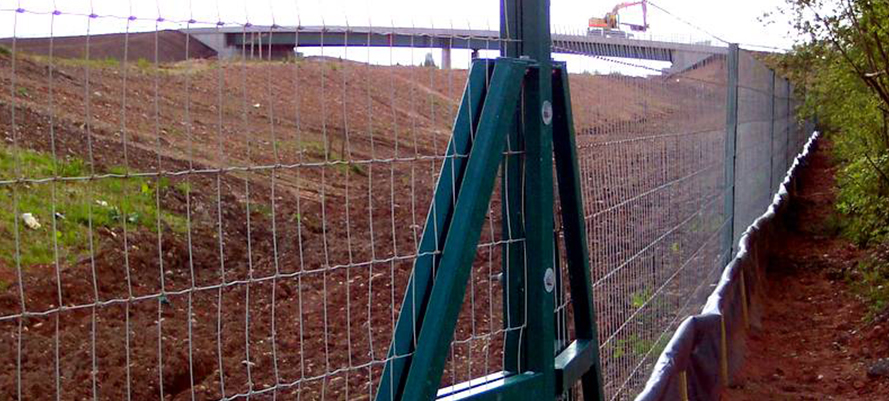
Galvanised stock fencing is strong, long lasting, economical and suitable for Cattle, Pigs, Sheep, Alpaca, Deer, Otters, Badgers, Poultry and a wide range of other stock or wildlife that you may need to keep in - or out- of an area.
A choice of wire heights, roll lengths and wire spacing's means almost every application has a wire specifically designed for it.
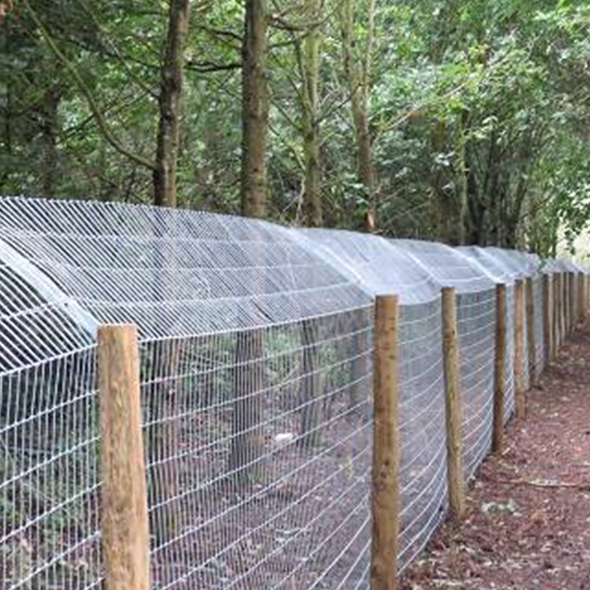
Hinge joints are the more traditional - these allow flexibility under pressure and the wire to be turned out as is necessary in certain applications - such as Otter & Badger Fencing.
The newer X knot or Titan joint incorporates a continuous vertical stay wire that is joined to the line wires with an innovative non slip knot. Characterised by exceptional resistance to impact and therefore ideal for higher pressure situations where opening sizes in the wire are important to be maintained - such as predator exclusion.
Please call for assistance in selecting the best wire for your application.
Roll sizes 50m, 100, 250m, 350m, 500m - options vary by type.
A huge range available including:
| High Tensile | Mild Steel | Deer Fencing | Lambsafe | Badger Fencing |
|---|---|---|---|---|
| LHT8/80/15 | L8/80/15 | LHT8/90/22 | HT8/80/22 | Ht15/158/8 |
| LHT13/122/15 | C6/90/30 | LHT13/190/15 | C8/80/22 | HT17/194/8 |
| HT5/53/15 | C8/80/15 | LHT17/194/15 | Pheasant Friendly | HT19/238/8 |
| HT/53/30 | C8/80/22 | HT13/190/8 | HT6/83/22 | Otter Fencing |
| HT6/83/22 | B8/80/15 | HT13/190/15 | Poultry Net | HT19/238/8 |
| HT8/80/15 | B8/80/30 | HT13/190/22 | LHT15/158/8 | T26/242/8 |
| HT8/80/22 | HT13/190/30 | |||
| HT8/80/30 | HT17/194/15 | |||
| T9/124/30 | T9/124/30 | |||
| T10/100/15 | T15/155/15 | |||
| T10/127/15 | T17/190/15 | |||
| T20/244/15 |
Otter Fence
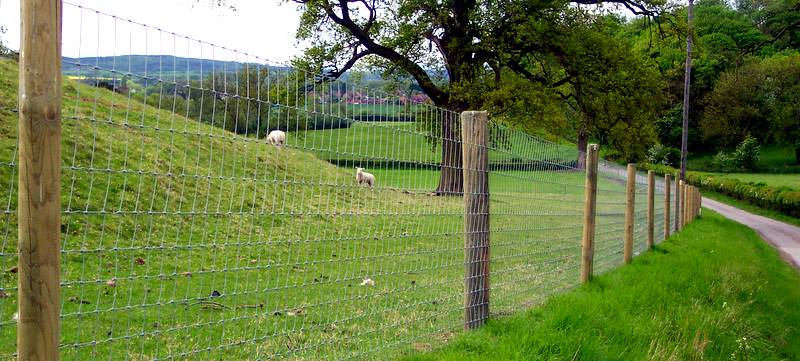
High Tensile

Deer Fence
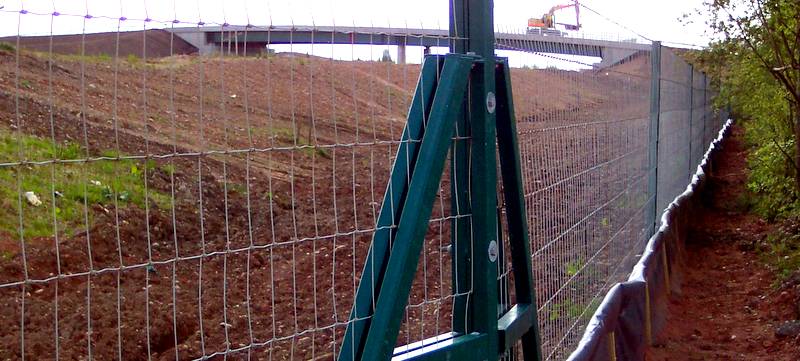
Badger Fence
Request a quote
- As a leading supplier and contractor, we specialise in high-quality agricultural and commercial fencing solutions.
- We Have Many References From Previous Clients, Including Local Authorities, Schools, Government Agencies, Businesses & Private Clients
- Committed to excellence, we use premium UK-sourced materials built to last.
- Contact us today for a free, no-obligation site visit and quote.
Galvanised stock wire provides a strong, economical fencing solution for containing livestock, excluding wildlife and protecting land. It is manufactured with horizontal line wires connected by vertical stays to create a series of openings across the fence.
Farm & Country Fencing supplies an extensive range of stock wire for cattle, pigs, sheep, alpacas, deer, otters, badgers, poultry and other livestock or wildlife. Different heights, wire strengths, opening sizes and roll lengths allow the specification to be matched to the intended application.
Stock wire is available for supply only or as part of a professionally installed fencing system throughout Hertfordshire, Essex and the surrounding areas.
Farm & Country Fencing supplies stock wire in roll lengths of:
- 50m
- 100m
- 250m
- 350m
- 500m
Available roll lengths vary according to the wire type and specification.
The range includes:
- High-tensile stock fencing
- Mild-steel stock fencing
- Cattle and sheep fencing
- Lambsafe fencing
- Pheasant-friendly wire
- Poultry netting
- Deer fencing
- Badger fencing
- Otter fencing
- Specialist predator-exclusion wire
The correct wire will depend on the animals being contained or excluded, the expected pressure on the fence, the required height, ground conditions and the design of the complete installation.
Stock wire product codes provide important information about the construction and dimensions of the fencing.
For example, a specification such as HT8/80/15 identifies:
- HT: high-tensile wire
- 8: eight horizontal line wires
- 80: an overall wire height of 80cm
- 15: vertical stay wires spaced at 15cm intervals
A code such as LHT8/80/15 refers to a light high-tensile version with the same number of horizontal wires, overall height and vertical spacing.
Other codes identify different wire constructions, heights, numbers of line wires and spacing between vertical stays. Customers should not select wire from its height alone, as two rolls of the same height may have different aperture patterns and performance characteristics.
Farm & Country Fencing can explain the available specifications and recommend an appropriate wire for the intended livestock, wildlife or boundary requirement.
High-tensile stock fencing is manufactured from stronger wire that can be strained more tightly than conventional mild-steel stock wire.
Its spring-like properties help the wire absorb pressure and remain taut. When correctly specified and installed, high-tensile wire can generally be installed with fewer intermediate posts than mild-steel stock fencing.
High-tensile stock wire is available in numerous configurations for applications including:
- Sheep and cattle
- Alpacas
- Deer
- Pigs
- Dogs
- Wildlife exclusion
- Predator-control systems
- General agricultural boundaries
The strain placed on high-tensile wire means that substantial straining posts, correctly formed corners and suitable end assemblies are essential. The performance of the finished fence depends on the supporting structure as well as the wire.
Light high-tensile stock fencing provides a more economical option for suitable lower-pressure livestock applications and certain short to medium-term projects.
It retains the tensioning characteristics associated with high-tensile wire but uses a lighter construction. It should therefore be selected according to the pressure expected from the animals and the conditions of the site.
Mild-steel stock fencing is a traditional, malleable option available in several configurations. High-tensile wire can be strained more tightly, while mild steel may be preferred where easier handling and greater malleability are required.
The correct choice will depend on the animals, fence length, terrain, expected pressure and supporting structure.
Hinge-joint fencing uses a traditional joint that allows a degree of movement when the wire is placed under pressure.
This flexibility makes hinge-joint wire suitable for many conventional livestock applications. It also allows the mesh to be turned out or cranked where a specialist fence requires a horizontal or angled section.
Farm & Country Fencing uses these characteristics within appropriate otter and badger-fencing systems, where the lower section may need to resist digging or help prevent animals passing beneath the fence.
The ability to turn or crank the wire does not make every hinge-joint product suitable for these applications. The height, aperture, gauge and complete installation method must still be selected for the target species.
X-knot or Titan stock fencing incorporates continuous vertical stay wires secured to the horizontal line wires with non-slip knots.
This construction provides strong resistance to impact and helps maintain the dimensions of the mesh openings when the fence is subjected to pressure.
It is particularly valuable in higher-pressure situations and specialist predator-exclusion fencing, where maintaining consistent mesh openings is important.
The appropriate joint and wire specification will depend on the complete project. Farm & Country Fencing can advise whether traditional hinge-joint wire or an X-knot or Titan system is more suitable.
Different animals place different demands on a fence. The wire height, aperture pattern, strength, posts and gates must therefore be selected according to the livestock and conditions of the site.
Cattle Fencing
Stock wire is widely used to create field and grazing boundaries for cattle. The specification and post system must reflect the type of cattle, grazing arrangement, public access and pressure expected along the boundary. Plain, barbed or electric strands may be incorporated where appropriate. Farm & Country Fencing has installed high-tensile stock fencing across public parks used for cattle grazing. The project also incorporated electric strands, kissing gates and drinking troughs as part of the wider grazing infrastructure.
Sheep and Lamb Fencing
Many sheep-fencing specifications use smaller openings towards the bottom of the mesh, helping contain lambs and smaller animals. Lambsafe wire is also available for projects where the mesh pattern must be selected with young animals in mind. Ground-level gaps, gate openings, changes in terrain and areas around feeding points should all be considered.
Pig Fencing
Stock wire can be specified for pig enclosures, where strong posts and secure treatment at ground level are particularly important. Gates, corners and feeding areas may experience increased pressure and should be planned accordingly. Additional electric wire may also be considered where suitable.
Alpaca Fencing
Stock wire can provide a practical and visually open boundary for alpaca paddocks. Farm & Country Fencing installed approximately 600 metres of lightweight stock wire for an alpaca enclosure, with reinforced sections introduced where the boundary was accessible to the public. The aperture pattern, fence height and reinforcement should be selected according to the animals, location and expected pressure.
Deer fencing is available in several heights, opening patterns and wire constructions. The correct specification depends on the deer species, whether the purpose is to contain deer or exclude them from a protected area, the pressure on the boundary and the terrain.
Farm & Country Fencing has installed deer fencing through a wooded area while minimising disturbance to surrounding trees and undergrowth. The project included carefully positioned posts, a timber-railed ditch crossing and a pedestrian gate.
Woodland deer fencing requires careful route planning. Tree roots, ditches, vegetation, changes in level and access points can all create vulnerabilities if they are not considered during installation.
Customers with a substantial deer-control requirement should discuss the dedicated deer-wire options with the Farm & Country Fencing team.
Stock wire can form part of a specialist exclusion system for badgers, otters and other predators. These applications require more than an ordinary upright wire fence.
Badger and Otter Fencing
Farm & Country Fencing supplies specialist stock-wire configurations for badger and otter fencing. Hinge-joint wire can be turned out or adapted to create a lower section that helps resist digging. Depending on the project, the wire may incorporate a turned-out section, buried fold or other anti-dig detail. The height, aperture, ground-level protection and gate design must be selected for the target species. Farm & Country Fencing provides a dedicated otter-fencing service for fisheries, waterways and other vulnerable locations.
Predator-Exclusion Fencing
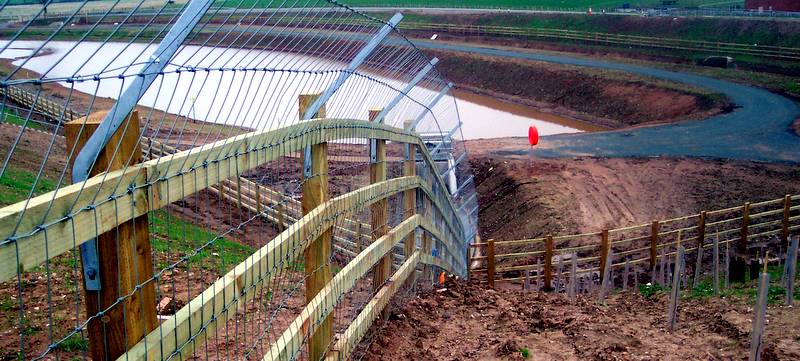
X-knot or Titan wire can be particularly valuable where maintaining the dimensions of the mesh openings is important. Farm & Country Fencing has incorporated specialist stock wire into a major predator-exclusion system developed in conjunction with the RSPB. That project used a buried return fold, cranked upper section, carefully controlled openings and adaptations around gates, ditches and weirs. The project specification was designed for that particular wetland site and should not be treated as a standard stock-fence installation. Predator exclusion requires detailed consideration of climbing, digging, water crossings and potential openings around the perimeter.
Farm & Country Fencing supplies poultry netting and pheasant-friendly stock-wire options.
Poultry netting can be selected for appropriate bird enclosures, while pheasant-friendly specifications are designed for rural boundaries where pheasant movement must be considered.
Ground-level openings, gates and roof sections can be as important as the main fence line. Poultry wire may need to be combined with other netting, electric fencing or buried protection according to the site and the predators present.
Stock wire can be fixed to post-and-rail fencing to combine the appearance and visibility of a timber boundary with more complete animal containment.
This arrangement can be suitable for:
- Mixed animal enclosures
- Livestock paddocks
- Rural boundaries
- Educational farms
- Selected dog enclosures
- Areas where smaller animals could pass between the rails
At Capel Manor College, Farm & Country Fencing incorporated stock wire into post-and-rail animal pens so that the enclosures could accommodate animals of different sizes.
The rails, posts, gates and wire must be planned as one complete system.
Every gate creates a break in the fence line and must provide an appropriate level of containment when closed.
A stock-fencing installation may incorporate:
- Field and livestock gates
- Fully meshed gates
- Pedestrian and kissing gates
- Vehicle entrances
- Specialist wildlife or predator gates
The gate dimensions, mesh cladding, ground clearance, hinges and closure should suit the animals and expected use. High-pressure gateways may require additional support or surfacing.
Farm & Country Fencing supplies a range of field and entrance gates and can provide custom solutions where a standard gate would leave unsuitable openings.
Stock fencing may be combined with plain, barbed or electric wire where appropriate.
Additional strands can supplement the stock wire, discourage livestock from pressing against it or provide further containment where appropriate.
Their suitability depends on the livestock, wildlife, public access and management of the site. Barbed or electric wire is not appropriate for every animal or location, so the complete arrangement should be specified carefully.
Farm & Country Fencing supplies stock wire to farmers, landowners, contractors, conservation organisations, businesses and private customers.
Before ordering, customers should confirm:
- The animals or wildlife involved
- Whether the fence will contain or exclude them
- The required height and aperture pattern
- The preferred wire and joint type
- The boundary length and suitable roll size
- Any required posts, strainers, gates or additional strands
Roll sizes and specifications vary by product. Discussing the project with the team before ordering helps avoid selecting wire that is the correct height but has unsuitable openings or strength.
Stock wire must be correctly strained and supported to perform as intended.
Professional installation helps ensure that:
- Straining posts are positioned at appropriate points
- Corners and terminations are adequately supported
- The wire is tensioned correctly
- Intermediate posts provide suitable support
- Slopes and changes in ground level are addressed
- Ditches, tree roots and soft ground are considered
- Gaps beneath the fence are controlled
- Gates integrate with the fence line
- Specialist folds or cranks are formed accurately
- Additional electric, plain or barbed wires are positioned appropriately
Farm & Country Fencing installs stock wire across farmland, parks, woodland and conservation sites.
A professionally installed stock fence should be inspected periodically and after events that may have affected the boundary.
Checks should include:
- Wire tension and damaged mesh
- Posts, strainers, staples and other fixings
- Gaps beneath the fence or around gates
- Vegetation, fallen branches or machinery damage
- Electric, plain or barbed-wire additions
Localised damage should be addressed promptly before it develops into a larger weakness.
Farm & Country Fencing supplies and installs stock wire throughout Hertfordshire, Essex and the surrounding areas.
Our experience includes livestock paddocks, public grazing land, educational animal facilities, woodland deer fencing, dog enclosures, pest-control boundaries and specialist wildlife-exclusion systems.
We work with farmers, landowners, private customers, local authorities, schools, conservation organisations, government agencies and businesses. References from previous clients are available.
Customers choose Farm & Country Fencing for:
- High-tensile and mild-steel stock wire
- Hinge-joint, X-knot and Titan options
- Wire for cattle, sheep, lambs, pigs and alpacas
- Deer, badger, otter and predator-exclusion specifications
- Poultry netting and pheasant-friendly options
- Roll lengths from 50m to 500m, depending on specification
- Supply-only and professionally installed options
- Gates, posts, strainers and associated materials
- Experience across farmland, woodland, parks and conservation sites
- Professional installation throughout Hertfordshire, Essex and surrounding areas
- A FREE Measure and Quotation Service
- FREE No Obligation Site Visits
Our team can help identify the appropriate wire construction, height, aperture and roll length for the animals, terrain and purpose of the fence.
What is stock wire fencing?
Stock wire is a galvanised wire-mesh fencing material used to contain livestock, exclude wildlife and protect selected areas. It is available in different heights, strengths, aperture patterns and joint types.
What do stock-wire product codes mean?
A code such as HT8/80/15 identifies high-tensile wire with eight horizontal line wires, an overall height of 80cm and vertical stays spaced at 15cm. Other codes identify different wire constructions and dimensions.
What is the difference between high-tensile and mild-steel stock wire?
High-tensile wire can be strained more tightly and has spring-like properties that help it remain taut. Mild steel is more malleable and cannot normally be tensioned in the same way. The correct choice depends on the application and supporting structure.
What is hinge-joint stock fencing?
Hinge-joint fencing uses flexible joints between its line and stay wires. It is widely used for livestock and can be turned out or cranked for certain specialist applications.
What is X-knot or Titan fencing?
X-knot or Titan fencing uses continuous vertical stays attached with non-slip knots. This provides strong resistance to impact and helps the mesh openings retain their dimensions under pressure.
What roll lengths are available?
Farm & Country Fencing offers roll lengths of 50m, 100m, 250m, 350m and 500m. Available lengths vary according to the wire type and specification.
Can stock wire be used for cattle and sheep?
Yes. Numerous stock-wire configurations are available for cattle, sheep and lambs. The correct height, strength and aperture pattern should be selected for the animals and site.
Can stock wire be used for deer?
Yes. Farm & Country Fencing supplies specialist deer-fencing specifications in different heights and opening patterns. The correct wire will depend on the deer species, terrain and whether the purpose is containment or exclusion.
Do you supply stock wire without installation?
Yes. Farm & Country Fencing offers stock wire on a supply-only basis and can also provide posts, gates, fixings and professional installation.
How much does stock fencing cost?
The cost depends on the wire specification, roll length, boundary length, posts, strainers, gates, terrain, access and any additional electric, plain or barbed wire. A site assessment is recommended for an accurate installation quotation.